Showing posts with label Emigration and Citizenship. Show all posts

Sunday, January 23, 2022

Waiting for America

 Dear grandchildren,

I've started each entry with "Dear grandchildren," plural. But actually, until just a bit over a week ago, I had only one grandchild, 2-year-old Leo. He is now a big brother! Adayla was named after her great great great grandmother, Thomas' favorite grandmother, Adele (her parents spelled it so people in America would pronounce it correctly). I'll be writing more about Adele when I transcribe Das Märchen Haus, which describes Adele's memories of her own childhood in Wermelskirchen, Germany.

But first, let's finish Thomas' book, The Rim of the Volcano. I'm realizing with these last few entries that Thomas no longer speaks of the war - and really, why should he? He wanted nothing more than to put those grim years behind him and focus on the future, which included plans to emigrate to America. It would be a dream-come-true for him to to be able to leave the ruins of a defeated, demoralized, and destroyed country and begin anew in a country that he heard was free, beautiful, and exciting. He couldn't wait. But, it seemed, he had to.

Read on.

In April 1947, I completed my Abitur (comparable to a high school diploma, but with a 13th year) from the Special Returning Soldiers course. My grades were nothing to write home about (if I had had one), but they were good enough to get by without having to take any oral exams which, as an introvert, I dreaded. My grade in religion was “sehr gut,” my math and English grades were ‘gut,” and everything else was “befriedigened” - sufficient. As it turned out, I earned my Abitur in the same year as my former classmates in Chemnitz. So now what? 

We planned to emigrate to America that year, so improving my English became my top priority. Ulli and her new friend Beate (who ended up being a lifelong friend) were already going to the Dolmetscherschule, interpreter’s school which, I decided, was a good idea for anyone planning to emigrate to America. So that became my next stop, too. My English was already pretty good, but this was as close as one could get to being immersed in a foreign language. Using Readers Digest magazines as textbooks, I learned about Lord Leverhulme, founder of Lever Brothers in England, something that would earned me top respect from Leverhulme’s niece who, it turned out, would become Rainer’s future mother-in-law. I also learned a bit more about women. I befriended Helga, the prettiest girl in class, and we studied together for weeks. When I was finally brave enough to visit her room one day (no phone then!), hoping to take our acquaintance to the next level, her landlady had news for me. “She moved out two days ago, to marry the very rich Generaldirektor of such-and-such a big company. She didn’t leave a new address.” So much for loyalty!

When it rains, it pours. The same troubled week, I found out that all our dreams about emigrating to America were just that: a dream. We were told that there were just too many DP’s (Displaced Persons in UN language) who had priority even over we “Rassisch Verfolgte[1]” who had not been in one of the worst concentration camps.

“How long might that be?” we wanted to know.

“Who knows! Three years, four, maybe six  -- until all of them are taken care of.” 

Meanwhile, instead of us emigrating to America, my father’s brother, Uncle William (who, in 1937, had urged my father to leave Germany while he still could) came back to Germany from a few years in the US. While there, he learned the secrets of American advertising, and he figured -- rightly -- that the emerging economy of Germany must by now be ripe for exposure to a kind of super-modern commercialism. He founded what might have been the first American-style advertising agency in Germany, Heumann Werbegesellschaft  in Frankfurt, the center of West German commerce. And with that, our invitation to America ended at the same time that the US Embassy told us that we would have to wait years before we could emigrate. And with Uncle William’s return to Germany, we no longer had a contact in America. We were thoroughly discouraged.

Uncle William


 I decided to go to college, hoping that I could graduate before the emigration plans would become active again. The threat of an armed conflict between West and East at that time amounted only to verbal “teasing,” but Churchill probably meant it when he said “We’ve slaughtered the wrong pig!”  If such a war would break out, Germany would surely be very much at the center of it. The Berlin airlift of 1948, in which the Soviet Union blocked the Western Allies' transportation access to the sectors of Berlin under Western control, proved it soon enough.  If that war would ever break out, I wanted to be as far away as possible -- and on the right side. Nora, with her “noble Communist ideals” could be in love with Russia, but I wanted nothing to do with it. I wanted to go to America, and the sooner the better. If that meant an incomplete college education, so be it. Nothing could be worse that being in the middle of a war again. That fear for me was even stronger than the fear of Germans finding another way to go after Jews or half-Jews like me – which was also a terrifying thought. 

Luckily, the Cold War remained cold – at least at that time.

I turned back to my studies. It was time to make some life-altering decisions. Where should I study, and what subject? Should I go to university or Technische Hochschule[2]? I wanted to stay in, but could I? How would I navigate these next years? Every decision, it seemed, came with life-altering ramifications. I’d had enough of life-altering ramifications; I simply wanted to settle in, go to school, and emigrate to America as soon as I was able.

I continued to live in the very small apartment in Solln with Rainer, Renate, Ulli, and baby Andreas, but that soon became untenable. Already, Rainer and Renate were divorcing.  Rainer had met Inge, the wealthy niece of one of the Lever brothers. With her came different plans for Rainer, such as a move to Switzerland, where they could access Inge’s considerable wealth. 

What followed were many trips to the München city offices and the Wohnungsamt, the lodging bureau. Yes, the city was deeply involved in who lived where. It turned out that a legal citizen of München was defined as someone who was a resident on July 31, 1945. Luckily, I could prove that Rainer, proactive as he was, had already registered me with police as a resident with him in April, 1945.


 That left the even more difficult task of a room assignment by the bureau. After many visits, and hours of standing in line, I was assigned a room at Thierschstrasse 26, second floor. That’s where I was going to spend the next four years, and in those years München (not Chemnitz) became the city that I would always consider as “home.”


 Despite having just completed a high school education that focused on truly “academic” studies like medicine, law, and theology, I decided that a technical field was more my kind of thing. We lived in a defeated and desperately needy country, so all medical schools were hopelessly overcrowded. When I was young, I had wanted to become a veterinarian, but now veterinary medicine seemed to be a useless luxury. So how does one combine the attractions of the study of law with a technical field? One becomes a patent attorney, which required first the technical degree of Diplomingenieur, and then a law degree. Seemed reasonable, though tentative. 

Or should I become the bridge builder, as my mother always wanted, an expression of her romantic imagination, nothing else. 

In any case, I was on my way to the München Technical University. But first I’d need to register. 

To get to the registration office, I had to balancing carefully along a thin board which had been laid across a large bombed-out section of the badly damaged building. Once inside, I was immediately informed that everybody wanted to study structural engineering because Germany was in ruins so not only bridges, but roads, buildings, and the entire infrastructure of the country would need to be rebuilt. Sorry, the structural engineering program was full. How about mechanical engineering, or electrical?  I didn’t have to ponder this decision. Electrons and I have a rather uneasy relationship, unlike my relationship with screws and bolts and steam engines, so my decision was made: mechanical it was.  Now I needed permission to live in München (which I already had) and money to finance my education. 


Ah yes – money.

Rainer had secured a loan for me at a local bank with which my father had previously had connections. That was great, but it was not enough, so I managed to obtain some additional support from the State Ministry for Racially, Religiously, and Politically Persecuted People under Nazi Rule. That covered tuition, plus a stipend of DM 100 during the school year (about $ 25.00 a month!) and DM 75 during vacations. 


 Once again I “walked the plank” to the TH admissions office to register, but once again I faced another hurdle. This time I learned that I would be required to serve six months in the Student Auxiliary Service to help repair the destroyed university buildings. I was put on a list of hopeful Mechanical Engineering freshmen for winter semester, 1948/49 and I was also assigned an apprentice position with a small local plumbing company. Most of the plumbing work in the TH buildings consisted of salvaging what pieces we could from destroyed buildings, cleaning them, straightening twisted pipe (if we could), rethreading them, and then installing them in the new buildings. As it turned out, working as a plumber was a major part of my education, not in terms of a degree, but for very practical reason that later in my life I would have houses to take care of. I learned the art of making do, of improvising, working with what could be made available.

Omi's note: Dad was always good at this - sometimes to the exasperation of his very American teenage daughter who wanted new stuff. But no - Dad always insisted on using up what you have, modifying what you could, and making do.

Sometimes we worked with mechanical linkages, drives, gearing, cams, interlocks, and other gizmos and gadgets. I loved it. That’s what I wanted to learn, I decided. How much better these models were than new electrical circuits that you can’t get your hands on and that make no sense!

In spring I transferred to the Wärmekraft Building, the power plant for the TH. In addition to heat, they would also provide the steam power for the labs for university departments that worked with steam engines, heat transfer, turbines, should such departments ever exist again. The work was not as interesting and consisted mainly of preventing the coal hoppers that were fed from a conveyor belt above the furnaces from plugging up.  That assignment had the advantage of introducing me to students who would become close friends for the coming four years: Sigi (who eventually became an Engineering professor at the TH), Walter, and Wolfgang.

[1] German-speaking Racially Persecuted Persons

[2] Technical University

Friday, September 10, 2021

Guess what? You are a German citizen!

Dear grandchildren,

Let’s take a little break from my father’s writings for this important message: 

YOU ARE A GERMAN CITIZEN! SO AM I! 


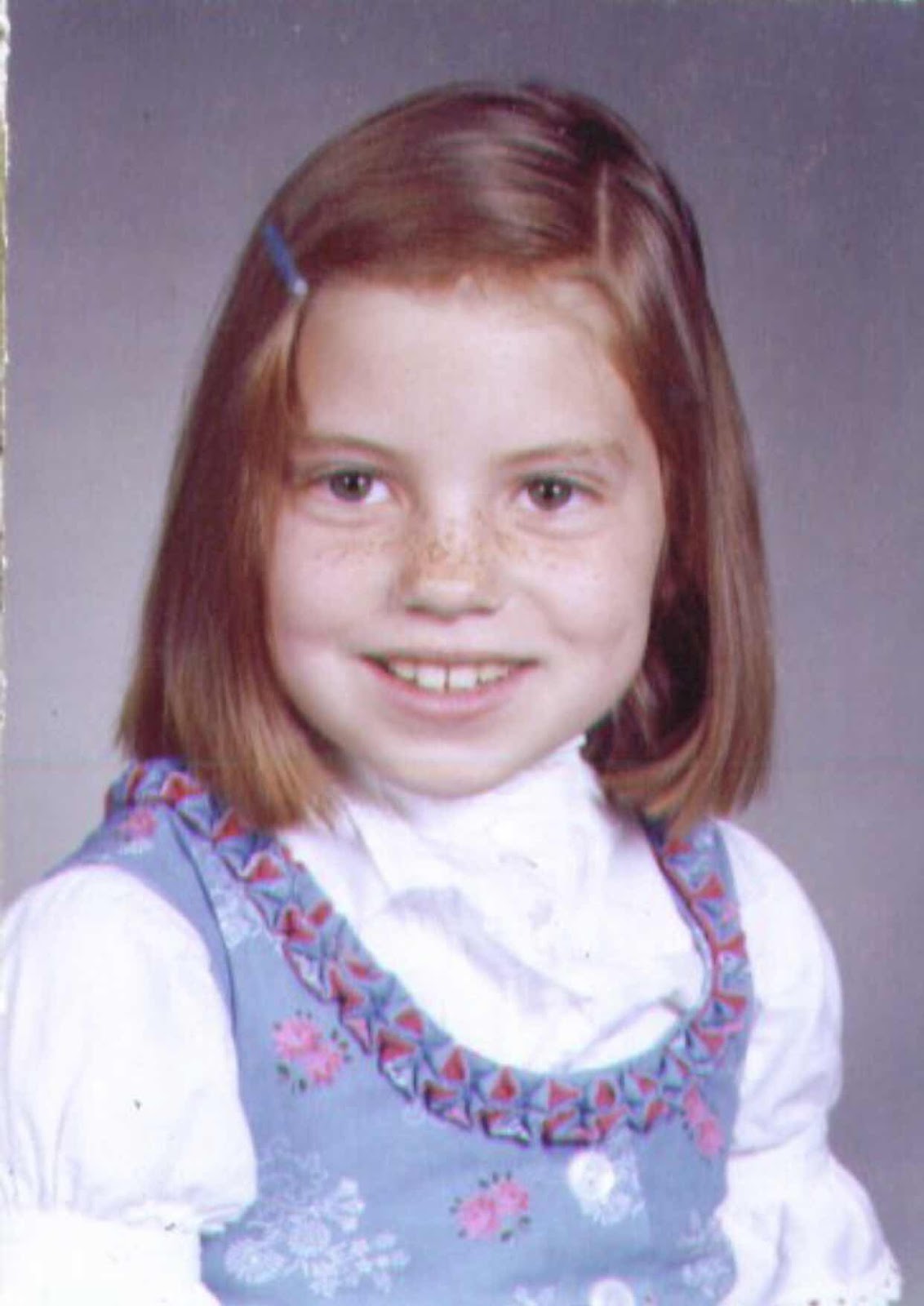
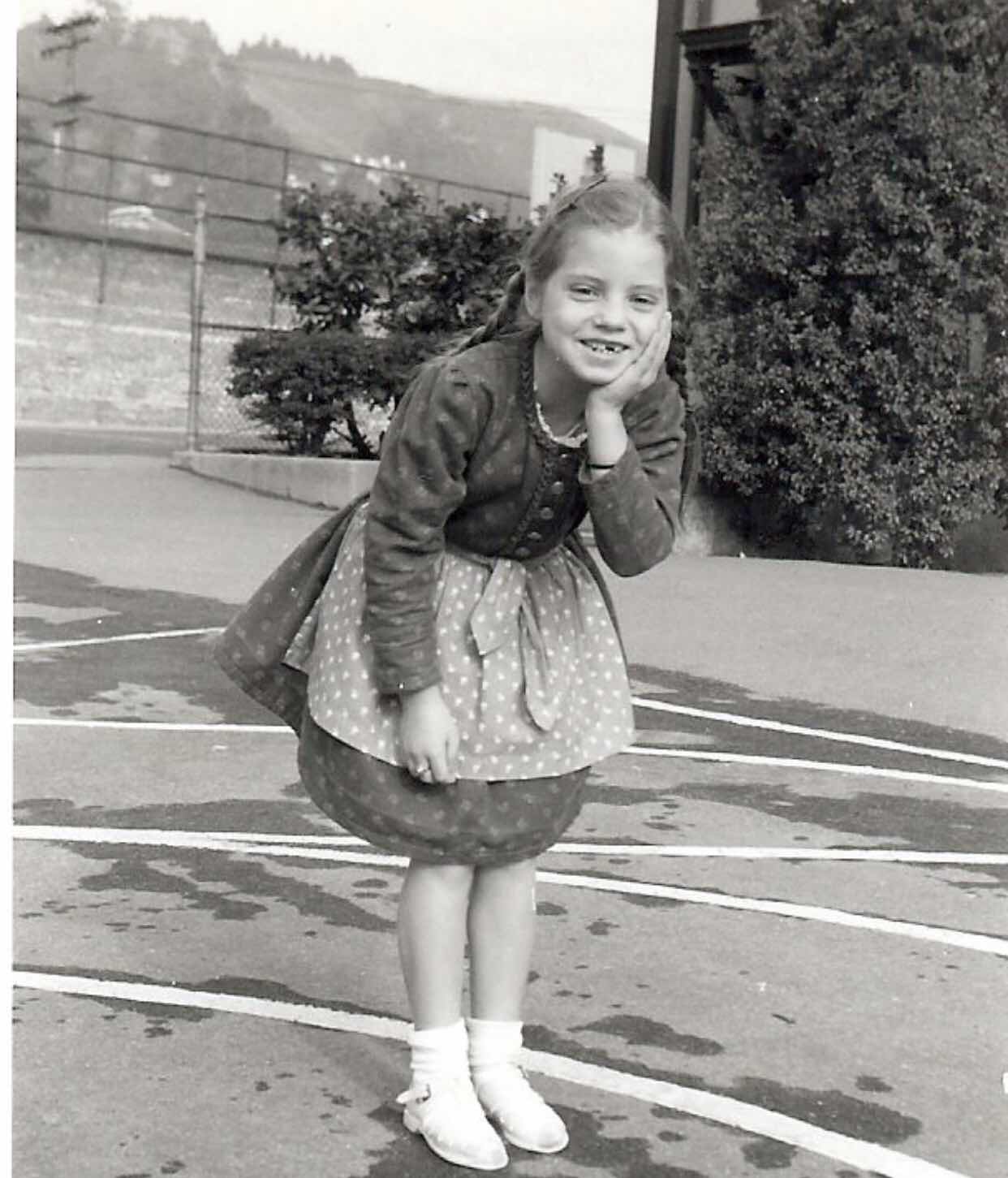
(I grew up as a German American - including wearing dirndl dresses to school.) 

I know- I was as shocked to find this out as you are. 

Katharina Schuss, the German Consulate in San Francisco, expressed it most concisely in an email she wrote to me yesterday after reviewing  numerous documents I sent her that showed that my parents were German citizens when I was born. 

Dear Ms. Snider,

I reviewed all your handed in documents, your questionnaire and all correspondence with my colleagues.

 The facts are the following: 

1.       Your parents got married July 13th, 1951  in München

2.       You were born in wedlock on November 29th, 1956 in Berkeley, CA

3.       Your father was a German citizen at the time of your birth (here we need a proof of his citizenship e.g. a copy of his German passport valid in at the time of your birth)

4.       Your father was naturalized US-American citizen in 1959 (naturalization date: 17 April 1959)  

 Acc. to § 4 chapter 1 of the German Citizenship Law effective at the time of your birth, you might have become German citizen through your German father. You are an US American citizen due to the fact of being born in the USA.

In contrast to the United States, German citizenship is not established through birth on German territory, but by descent from a German legal father.

Based on the information you provided, there is a good possibility you are already in possession of German citizenship. 

However, we as a Consulate are not allowed to make legally binding decisions in citizenship matters. For everyone living outside of Germany, this can only be done by the Federal Administration Office in Cologne.

As your claim to German citizenship is based on your father, I would therefore recommend you apply for a so-called “Certificate of Citizenship.” Once the Certificate of Citizenship is issued, you can apply for a German passport.

In your case, we need the following documents to support your application:

·         Proof of your father’s German citizenship (ideally his old German passport if still available)

·         Your father’s US certificate of naturalization

·         Your parents’ marriage certificate

·         Your father’s birth certificate (the long version stating who his parents were)

·         Your mother’s birth certificate (the long version stating who her parents were)

·         Your birth certificate (the long version stating who your parents are)

·         Your current US passport

Please let me know if you have any further questions.

Further information you find on our website:https://www.germany.info/us-en/service/03-Citizenship/certificate-of-citizenship/933536

 Mit freundlichen Grüßen/ Sincerely

Katharina Struß

Vice Consul – Deputy Head of Legal and Consular Affairs

Consulate General of Germany

1960 Jackson Street, San Francisco, CA 94109

So unbeknownst to me, I’ve been a German citizen all along because I was born to a father (I think it’s been amended now to include mother, as well) who was a German citizen on the day of my birth! It turns out that all I need to do is affirm, acknowledge, and accept my German citizenship! This process takes about two years at this point, due to a severe backlog, but when all is said and done, I *and all my direct decedents* will be able to get German passports! Think of it as my Germanness being forgotten or dormant, but in effect since my birth. Then my descendants - YOU! - will have the same status because, like me, you were born to a German parent without being aware. 

My father kept just about every important document he was ever issued. There is a binder on my bookshelf filled with hundreds of these documents. His German passport is not among them. I believe that he (and Mom) were ordered to surrender their German passports upon receipt of their American passports in 1959, and that’s why they can’t be found in Dad’s document binder, but one way or another, I’ll need to find those passports - or copies of them. I’m sure some Bundesamt (official government office) in Germany has them!   

Why am I going through all the trouble to affirm my (and thus your) German citizenship? (Yes, you can have dual citizenship.) Because way back in 1938, when things looked pretty bad in Germany, some lucky people left. After that, it was impossible to leave unless you had the necessary papers, the most obvious and helpful of which was a passport from another country. Who knows when - or if - you or your parents (or even your children!) will want to leave the US? This is definitely not the country it was when my parents immigrated here in 1953 with such high hopes, and I fear the worst for America these days. I want you to have options! 

Much love, 

Omi


Sunday, January 3, 2021

The Heinrich-Beck Schule in Chemnitz, Then and Now

 Dearest grandchildren,

In this excerpt, Thomas describes what schooling and education was like for him as he grew up in Chemnitz. When I read this, I was astounded at the vast difference between his school experiences in 1930s Germany and mine in 1970s America - and if I wrote about my own school experiences, you might be astounded at how different they are from yours. 

I can only hope that, by the time you're all in (and through?) school, you don't relate to some of my father's experiences in school as the Nazis rose to power. I am terrified that this might be the case, that we are losing our democracy in America - and that is why I'm trying hard to get us German citizenship. (Since I was born to German citizens before they naturalized as US citizens, I - and your parent, and YOU - are German citizens; we just need to go through the process of affirming it! I'll write more about this later.)

 His is my father's description of his school days in Chemnitz:

Public Kindergarten didn’t exist in Germany in those days. I entered first grade at the Heinrich Beck Schule, our local elementary school, probably in Spring of 1934 at the age of 5½. Like all first-graders, I got a "Zuckertüte”, (literally "sugar bag", a long, pointed, colorful cardboard cone filled with candy, cookies and party favors) a bribe to make us believe that it was a preview of things to come! Far from it!

Zuckertüte

A school child (not my father) with a Zuckertüte.

School was strictly separated - girls in the building on the left, boys in the building on the right. The gym buildings and even the play yards were separate. We sat at desks made for two that were neatly arranged in rows, screwed to the floor and unmovable. When the teacher entered the room, we were all required to stand at the side of his desk bench until the teacher said, “Heil Hitler!” and “setzen[1]!"

When Carl’s and Thomas’ heirs visited Chemnitz in 2018, we visited the Heinrich-Beck-Schule where Thomas went to grade school. You can read details about our “field trip” HERE. I first read Dad’s words about his grade school experience before I visited Chemnitz, but I heard his words again in my mind on the day we actually stood in the classroom (with newer desks, of course) that he describes. It was a profoundly emotional experience!

Beck classroom

Beck schule

Beck schule heirs

(These heirs visited the Heinrich Beck Schule in Chemnitz in 2018: left to right – my daughter, Kat, my son, Peter, my aunt, Ulli (Carl’s daughter, Thomas’ sister), me, Ulli’s son (my cousin), Marcus, Ulli’s daughter (my cousin), Claudia, and Ulli’s husband, Michael Hanley.)

Dad continues:

I don't think we knew any letters or numbers before we entered First Grade -- no “Sesame Street” yet! We learned reading with boxes of cardboard letters, the printed letter on one side, the cursive on the other (but that side was not to be used until we were bigger, in second or third grade). To learn writing, we had black slates with a moistened sponge hanging on a string. I was naturally right-handed, but others had to become right-handed. Being left-handed was simply not allowed.

Several school incidents stick in my memory, none having anything to do with reading or writing!

Living in a Protestant-Lutheran area, religion was an important subject in school. We heard stories from the New Testament exclusively, many centered on the crucifixion. I remember distinctly that one kid fainted every time that story was told, without fail. He fell off his bench, landing on the floor with a loud thud, It’s the kind of sound one doesn't forget. Then the custodian had to come in and clean up the vomit. I was impressed, but I could never really relate to the overwhelming impact the story had on that boy. It was my first exposure to the power religious intensity has for people who are deeply exposed to it from childhood.

My other persistent memory took place in gym class. I told my brother Rainer about it: "Der Sohre hat einen wie du![2]“ I had no idea at the time what it meant in Germany at the time to not to be circumcised; I only knew that Sohre was the only boy in our class who was circumcised. If Rainer knew what it meant, he did not tell me. The only other thing I remember from gym class was this: I was rather fat at the time, and thus hugely embarrassed about having boy breasts larger than anybody else, so my greatest challenge was to spit into my hands to moisten my underarms so I could flatten my chest. Not easy when you have to let go to catch or throw a ball!

Every teacher had a cane stick. If you misbehaved, or scribbled on your slate, or tried to write with your left hand, you’d be called to the front of the class where you’d get a slap on the hand with the stick - on the palm for minor infractions and on the knuckles for more serious offenses. It happened to me only once (I can’t remember the nature of my infraction), and then only on my palm. It didn't hurt much, but it was most embarrassing.

Thomas about 8

The educational philosophy in Germany was very different from the educational philosophy in America. In 1930s Germany, the only time a student would stand at front of the class was for punishment, when the teacher would humiliate the student with a sharp whack with the cane. Only much later, in high school, would students appear in the front of the class for real educational purposes, such as reciting a poem by Goethe or Schiller. Contrast that with America in the 1960s when my children were in school: in kindergarten, kids were encouraged to bring something from home and share it with the class by telling all about it. No wonder Americans seem to have a knack for public speaking!

One day when I was six, the teacher told us to stand up, one row at a time, and tell what our fathers did. I wasn’t used to questions like that - and I sat in the first row!

“My father… he… he works in the bank”, I stammered timidly.

Zschorn, a popular student who sat two rows behind me, stood up and said loudly, with great confidence, “He’s a banker!” Ah so. Now here was somebody who must know a lot. A hero was born.

The first time I made any friends was in grade school. One was Zschorn, admirably streetwise, the son of a pharmacist in town. To me, "der Zschorn hat gesagt...[3]" became the ultimate proof of anything, an expression that was often (and cynically!) quoted by Rainer.

Zschorn was good at school; I was good at home. I even got a medal to prove it. Father had seen to it that I was always obedient and eager to please. So eager, that it became my job to do little valet jobs for him - bring his cigar box, get the newspaper, sharpen his pencil… whatever. One day, upon returning from a trip to Leipzig, Vati gave me a small button to wear on my lapel. He called it a Kammerdiener-Orden[4]! I proudly wore it to school, showing it off to the other kids - much to Rainer’s amusement, of course.

We often vacationed in Bansin, a resort on the Baltic Sea. This picture was probably taken in 1935 or ’36. At the left is our cousin Hans-Helmut, much envied by us because he was much less pampered than we were. At that time, the old black, white, and red flag, just before it was completely outlawed, still served as an open symbol of an attitude which said “We are good German-Nationals -- no Swastika for us!”

Hans-Helmuth Ulli Rainer Thomas at Bansin


I somehow had a very vague feeling that there was something I didn’t know about my place in the world. I knew something was different, something related to the propaganda about the Jews being our doom. Once, when I was still in early grade school, I showed my father something I had picked up when learning numbers. “My teacher says that the number 6 looked like a Jew’s nose!” I explained to him when I came home. Father said simply, “That’s a really stupid thing to say,” and left it at that.

And left me with a big question in my own mind.

6 classroom

(Image credit: United States Holocaust Memorial Museum)


[1] “sit down!”

[2] “Sohre has one like you”.

[3] “Zschorn said…”

[4] “Medal for a Personal Vallet”